Sign in

Registered users can set up individual fundraising pages.

close ×

Don't have a username? Register ›
Forgot your password/username? Get help ›

Myanmar

Burmese in the Irawaddy Delta struggle to rebuild their lives in this culturally rich and infamously reclusive nation.

Latest News

  Posted June 18, 2009

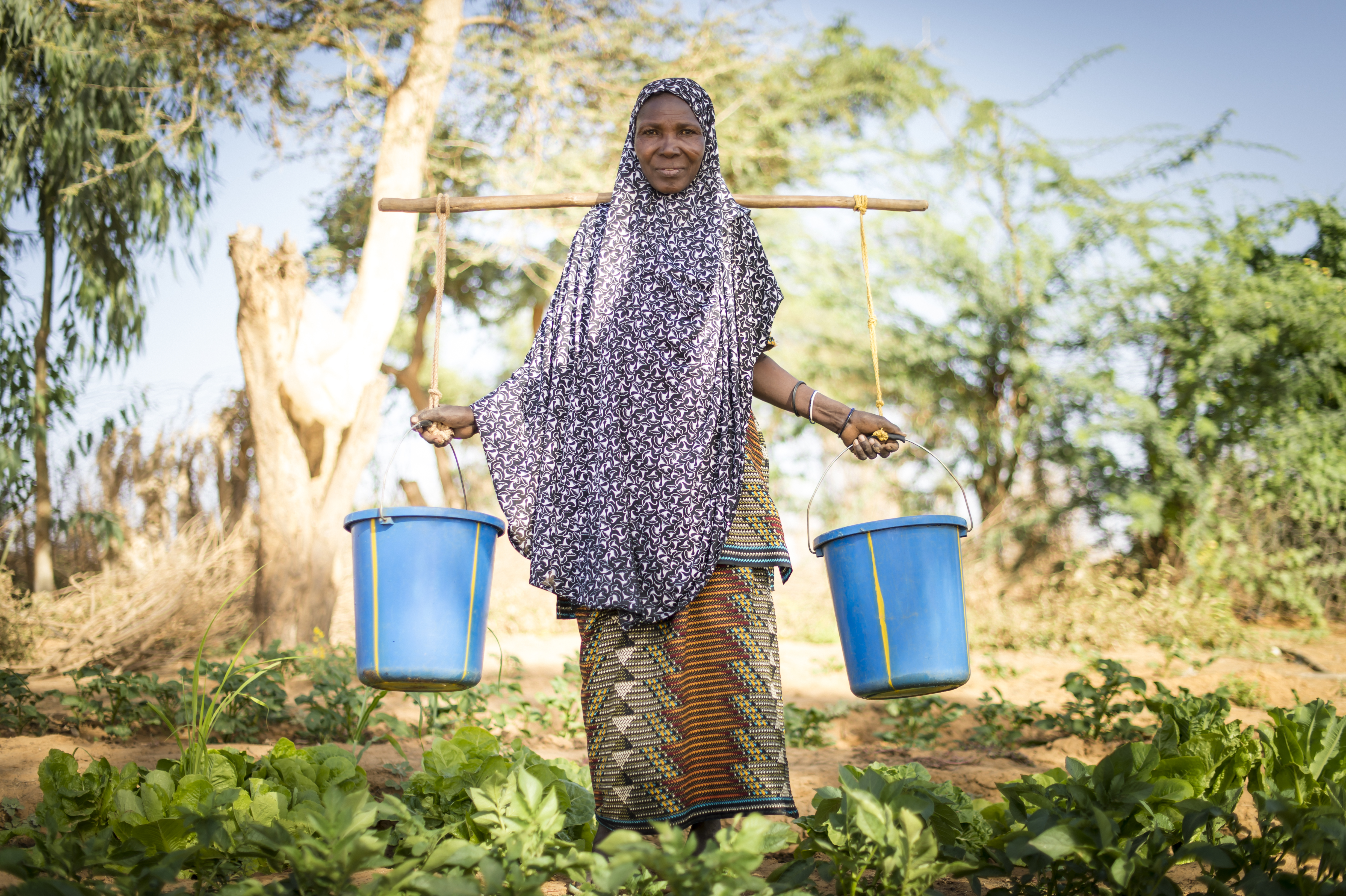
Regrowing the Garden

Country: Myanmar

Photo: Jeremy Barnicle/Mercy Corps

Life here in Bo Kone, Myanmar, a village of about a thousand people, has never been easy. Located on an isolated island in the Irrawaddy Delta, it's about an hour's boat ride to the nearest town.

And then Cyclone Nargis tore through the village last year, killing about a quarter of its inhabitants and submerging in salt water its acres of rice fields.

Those who survived — including Myint Aye, the village geography teacher and a 47-year-old mother of two — lost everything...

Read the rest of Myint's story — and tales of other women who are working hard to feed their families — at onetable.mercycorps.org.

Posted May 21, 2009

Helping Myanmar, One Year After the Storm

Country: Myanmar

It was just over one year ago — on May 2, 2008 — that Cyclone Nargis made landfall along Myanmar’s coast. The high winds, heavy rains and tidal surge killed more than 140,000 people, severely damaged or destroyed buildings and bridges, and completely disrupted the livelihoods of fishermen, farmers and families living in the low-lying Irrawaddy Delta.

Mercy Corps responded to the disaster quickly, rushing items such as tarpaulins, work boots and wind-up flashlights to local non-governmental organisations providing relief in the Delta and partnering with the UK-based medical aid organisation Merlin, which had worked in the devastated Delta township of Laputta since 2004.

A community-centered response

In addition to supporting Merlin's efforts to restore clean water and sanitation in Laputta — where an estimated 80,000 of 350,000 residents died in the cyclone — Mercy Corps began helping rice farmers rehabilitate more than 2,000 acres of field, hungry families grow their own vegetables, and out-of-work residents in 88 villages earn a fair wage by clearing debris and repairing roads and buildings.

One year after the storm:

  • More than 2,400 families received materials to cultivate rice
  • More than 3,186 families received materials to start small-scale kitchen gardens
  • More than 1,077 families received agricultural inputs such as rice seed, tillers andfertilizer for winter crops
  • 1,270 families received livestock
  • 295 individuals benefited from microenterprise grants
  • 605 boats were distributed
  • 103 ponds were cleaned
  • A total of 13,794 men and women from 98 villages earned approximately £261,000 through Cash-for-Work projects, providing an immediate cash infusion to the local economy to help restart local markets, assist with food-security and provide stability for local communities

From emergency aid to longer-term recovery

Cash-for-work projects are a signature Mercy Corps approach, providing a quick and critical boost to local economies. Our team’s assessment showed that our cash-for-work programme helped residents with address community needs like drainage rehabilitation and removal of standing water, road construction, employment generation, general village debris cleaning, and a revitalised transportation infrastructure.

In addition to giving them a source of income, the majority of respondents said that they enjoyed participating in the programme because it allowed them to stay in their own villages for work; it reduced their feelings of stress, trauma, or helplessness brought on by the cyclone; and it created a healthy environment in the community.

Furthermore, many survivors enjoyed the programme because it allowed them to buy fishing nets or other livelihoods assets, or because they received tools, equipment or other materials that they could then use to rehabilitate their homes and land.

In addition to the cash income and resumption of economic activities, 100 percent of respondents reported that the Village Rehabilitation Project’s cash-for-work activities made it possible for them to return to or stay in their own villages.

Next steps

We’ve accomplished a lot in a year’s time, but our work in Myanmar is not done. We're scaling up our economic recovery programmes in Laputta township, establishing community resource banks for draught animals and power tillers, distributing boats and nets to help still-devastated fishing families, and training livestock owners and veterinarians in better animal care and breeding practices.

We're also making sure the community's gains are sustainable ones. In January, Mercy Corps helped open the Laputta Community Resource Centre, a project designed to boost the ability of local groups to support community-led recovery efforts. And we continue to assist other local organisations — by partnering with them on needs assessments and seed distributions and providing them with training in key areas.

When our work in Myanmar is finished, we hope to leave in place a local network of organisations that can carry out the work of building sustainable rural communities.

  Posted May 13, 2009, 4:59 pm by Chelsea Wieber

Burmese farmers caught in poverty trap

Country: Myanmar

Farming communities in Myanmar's Irrawaddy Delta have always followed a cycle of debt. Each year, wealthy land owners would lend farmers money, tools and cattle needed to till the soil. After the harvest, the debt is repayed and the cycle continues.

Farming is important for delta communities. The Irrawaddy Delta produces more rice than any other region in the country. Nearly everyone is employed through rice production or the fishing industry.

So when Cyclone Nargis hit the delta about a year ago, the storm not only destroyed homes, fishing boats and agricultural fields, it destroyed livelihoods.

Nargis was the worst natural disaster Myanmar has ever experienced and racked up about $4 billion in damage. Some say the damage sustained in the Irrawaddy Delta was as bad as the Indian Ocean tsunami. Emergency aid from the UN, the government and NGOs has helped shelter and feed the thousands of survivors but there's still a lot of recovery work to be done.

Today, farmers looking to start over are caught in an incredibly frustrating situation: the wealthy land owners that used to lend money and tools lost everything as well, so now there is nobody to lend. Without cattle, tools and seeds, the farmers have little chance of ever getting ahead. Adding to the situation, prices for crops are down from past years. This leaves farming communities with few options, therefore trapping them in poverty.

I first learned about this debt trap in the Al Jazeera video below. The situation is so heartbreaking, but also too common in poverty-stricken communities. Mercy Corps has helped more than 7,000 families rebuild their rice paddies in the delta. We've also given more than 25,000 people small grants to help them earn an income, which in turn helps restart the local economy and helps free these communities from the cycle of debt.

Posted December 15, 2008 by Jeremy Barnicle

Field Interview: Michael Gabriel

Country: Myanmar

Mercy Corps' work in Myanmar in the months following the devastating cyclone that struck in the country in May 2008 has begun moving from disaster relief to longer-term recovery work. In this short video, Country Director Michael Gabriel talks about our immediate response to Cyclone Nargis and our plans to help families in Laputta Township restore their livelihoods.

Posted December 8, 2008 by Jeremy Barnicle

Taking Charge of the Recovery

Country: Myanmar

Kan Bet, Myanmar - In my four years at Mercy Corps, I have often heard colleagues talk about "community mobilization" as something central to our approach in the field, but to be completely honest, I never really understood it.

I knew it had something to do with getting communities together to talk and figure out how to do things, that it is supposed to promote transparency and inclusiveness, and that it was a better way to do emergency relief and long-term development.

And today, I got it. Here in Kan Bet, a bustling riverside village in Myanmar's Irrawaddy Delta, I saw community mobilization in all its chaotic, full-throated beauty.

A little bit of background: in the aftermath of Cyclone Nargis, communities like Kan Bet have lots of needs, some urgent and some slightly longer-term. In the old days of relief and development, an aid group would come into a community like this, do its own assessment, decide that the village needed a bridge or a water system or a school, build it, take some photos, and move on.

Thankfully, the humanitarian community has learned some important lessons in recent decades:

  1. Relief and development programmes only work when local communities support and own the outcomes of outside support.
  2. Process matters as much as outcomes in our work. In other words, it's still important that struggling communities get the school or bridge or training programmes they want, but it's also critical to that communities learn to collaborate, compromise, prioritize, and implement those projects together in a way that gives that community's various stakeholders a seat at the table.

And that's where community mobilization comes in.

The power to decide

Mercy Corps has the financial resources and expertise to help cyclone-affected villages like Kan Bet make some big steps toward recovery. But in order to determine where to invest and to help teach participatory decision-making, we need a public process.

In Kan Bet, that public process started today. More than 200 local residents, packed and perspiring in a Buddhist temple on the edge of town, got the opportunity to say their piece about how the village should move forward.

Road construction or small business grants? Build a new fishing pier or renovate the market?

As the group went through a list of possible investments, everyone had a chance to say yea or nay. Though there was no formal speech-making, the open forum definitely featured the cast of characters you'd find at any public meeting around the world: the young radical, the old crank, the righteous matriarch, the wise man.

And I was struck: For this time and this place, this is what democracy looks like.

It's far from perfect. They badly need a microphone. The list they're voting on is much too long, and the process far too slow, to finish the meeting today. The young Mercy Corps staff members running the meeting look wrung out already, and we're only about 15 minutes in.

"The process is working"

The ringleader of this circus was Wayan Tin Maung Win, an exceedingly earnest 26-year-old programme officer for Mercy Corps, who under the circumstances did an excellent job of walking the group through the process of ranking their priorities.

"So what if I suffered?" asks Wayan after the meeting. "I am satisfied because people are engaged and the process is working."

Win Win Maw, a 36-year-old mother and shopkeeper, is thrilled to be part of the process.

"I've never seen anything like this before," she says. "We have no experience doing this so people are trying to figure out what to do: how to vote, how to get people to support them."

Win Win is pushing hard for grants to small businesses: her inventory was wiped out in the cyclone and she needs to replace it in order to really get the shop up and running again.

"I think about two-thirds of the people really understand what we are doing here," she says, "but I think it's an effective way to make a group decision."

It's important to note — given that the Myanmar junta is known in the West for suppressing democratic activists — that the local government knows these meetings are happening.

"They understand how we are running this process and I think they are fine with it — it's leading to some infrastructure projects that really help these villages," says Michael Gabriel, Mercy Corps' country representative in Myanmar.

The outcome of these meetings, in villages through the Irrawaddy Delta, is a community recovery plan that will allow aid groups and governments to make recovery investments that truly reflect the communities' priorities moving forward.

Posted December 8, 2008 by Jeremy Barnicle

Kitchen Gardens in Bo Kone

Country: Myanmar

Bo Kone, Myanmar — Life here in Bo Kone, a village of about 1000 people, has never been easy. Located on an isolated island in the Irrawaddy Delta, it's about an hour's boat ride to the nearest town.

And then Cyclone Nargis tore through the village, killing about a quarter of its inhabitants and submerging in salt water its acres of rice fields.

"When the wind and rain finally stopped, I saw that my house and my farmland were destroyed," said Athey, a 40-year-old mother of four who goes by one name. "Luckily my family was all alive, but I had no idea how we would live."

When Mercy Corps arrived in Bo Kone, we saw that Athey and her neighbors were deeply vulnerable: their farms had provided their food and their income, and now that was all gone.

But there was even more to it.

"People were already malnourished," says Hadi Akther, a local agronomist running a Mercy Corps-funded food security and livelihoods recovery programme in the Delta. "We wanted to find a way not just to restore the rice farms they depended on, but to enable people to diversify their diets and eat more nutritious meals."

Before the cyclone, people had to go all the way to the city of Laputta — about an hour away by boat — to get vegetables. The added hassle and expense meant few did it.
With that challenge in mind, Mercy Corps and its partner Merlin have helped Athey's and 300 other families in Bo Kone establish "kitchen gardens" — small growing plots that will help satisfy household food needs — by providing seeds, gardening tools and technical training.

"When I heard about this opportunity I knew I wanted to participate. I knew how to farm but it was good to have these new seeds and tools," Athey says. "I was confident I would succeed and I knew this would help my kids."

Akther, the agronomist, says the programme emphasizes crops like green beans, pumpkin, watercress and rosehips, but allows participants to grow whatever they choose.

In Athey's case, she found a strong local demand for a certain type of greens, and that's where she's made her investment.

"I am making good money selling these greens and that allows me to buy other things we need for the house," she says.

And it doesn't stop there. As Myanmar moves into its "winter" — when the average temperature is 80 degrees instead of 90 — Mercy Corps is ramping up a winter vegetable programme that equips these households to grow a whole new set of crops.

"I am really excited for this new programme — I know exactly how I am going to expand my garden," Athey says with a smile, pointing to an unused corner of her yard.

More than 2,000 households throughout the Delta — comprising about 10,000 people — are currently participating in the programme, which Mercy Corps hopes to expand in the coming months.

Posted December 8, 2008 by Jeremy Barnicle

Work on the Playground

Country: Myanmar

Be Toot, Myanmar — To be honest, it doesn't look like much: a group of 20 or so people moving clumps of mud from one spot to another in a field surrounded by a few buildings.

But this is an important project, insists Mercy Corps programme manager Mra Sabai Nyun.

"This is the village school, and this field is the playground," she explains. "But Cyclone Nargis caused so much flooding in this area that there's still lots of standing water here, so the school kids have no place to play. The school master asked if we could fix it."

So I am seeing a work crew of village residents — largely the parents and older siblings of the kids at this school — hauling mud across the schoolyard to fill in these big, swampy pools of standing water.

It is hard and dirty work, but Zin Min Nyi, a 19-year-old with a fashionable haircut, says he's having a good time.

"It's actually pretty fun," he says. "Lots of my friends are working here too and it feels good to work on a community project."

"But what about the money?" I ask.

He smiles a little sheepishly and doesn't answer.

"We in Myanmar never want to say it's about the money," my colleague Mra Sabai tells me. "It's cultural — but of course people need the money."

Life has been tough for Zin since Cyclone Nargis. His father died the night of the storm, their home was heavily damaged and the family grocery business still isn't back on track.

When Mercy Corps convened a community meeting some weeks ago to discuss the village recovery programme with local residents, Zin immediately signed up for this project.

"We had to take a loan — at 20 percent interest — to repair the house," he says. "The first thing I am doing with this money is repaying that. The rest we will invest in the grocery business."

Zin and his mother, who is also participating in the programme, make about $2 a day, so the combined income for their household from this project will be £36-80. In an area where the average annual cash income for a family is £39, this represents a significant cash infusion at a time when people need it desperately.

"People often lose the means to their livelihoods — the tools of their trade, let's say — in a major natural disaster like this," says Michael Gabriel, Mercy Corps' country representative in Myanmar.

"So among all the other challenges they face, they can't get right back to business: the fishermen have lost their boats and nets, the farmers their seeds and draft animals, the carpenter his tools and shop. These cash-for-work programmes earn them the cash to replace some of those lost assets and get back to earning money the way they know how."

The village recovery programme here in Be Toot is just ramping up, but Mercy Corps managers expect to employ several hundred people over the next few weeks.

Posted December 8, 2008 by Jeremy Barnicle

A Welcome Harvest

Country: Myanmar

Bo Kone, Myanmar - It would be hard to overstate the importance of rice to the people of Myanmar's Irrawaddy Delta. Rice is the staple food around which all meals are built. It is the cash crop that fuels the local economy. It is the livelihood that employs just about everyone who lives here: when it's time to plant, everyone is planting; when it's time to harvest, everyone is harvesting.

So when Cyclone Nargis flooded millions of acres of rice paddy with salt water, it wasn't just a food source that was threatened — it was an entire way of life.

To complicate matters, the cyclone hit just before planting season and farmers lost everything they needed to get the year's crop in the ground: seed supplies, draft animals and equipment.

"Everything we had was gone," says Thein Khine, a 22-year-old rice farmer as he takes a break from harvesting his crop. "We lost 4,000 bushels of rice in storage, 32 water buffalos and cows, our house — but we were very lucky that our family was okay."

When Mercy Corps arrived in the area soon after the cyclone, it was immediately clear that getting the rice farms back on track needed to be a top priority.

"The situation was not good," says Hadi Akther, a local agronomist running a Mercy Corps-funded food programme. "Saltwater had inundated the fields, so when the water subsided, the salinity in the top layer of soil was still high. There was tons of debris in the fields. Embankments that controlled irrigation were broken. Seeds and tools were destroyed."

The first step, Akther says, was to replace lost seed. Mercy Corps and its partner Merlin, the UK-based humanitarian organisation, immediately brought 100 metric tons of high-yield rice seed to the affected area and started distributing it to farmers.

Then, because it was critical to get the seeds in the ground fast, Mercy Corps provided power tillers and fuel to replace lost draft animals. We also distributed fertilizer and trained farmers in techniques that would maximize their yields.

Watching a field full of workers harvest rice, it appears the programme has been a success.

"Without this support," says Thein Khine, the farmer, "the best case scenario would have been a yield about a third the size of the usual harvest. There is still salty water on some of my land and we planted a little late, so I expect we'll get about 70 percent of what we'd usually get."

And for Thein Khine and his crew of day laborers, 70 percent is just fine for now.

"I know we'll get the harvest back where it was," he says. "It could take five or six years. In the meantime, my whole family is cutting back, living on just the necessities. But we'll get there."

Posted December 8, 2008 by Jeremy Barnicle

Bold Woman Makes a Difference

Country: Myanmar

Yangon, Myanmar - When a massive cyclone pounded Myanmar six months ago, Mra Sabai Nyun knew exactly what she wanted to do.

"I did some quick repairs on my mother's house in Yangon, which was affected by the storm," she says, "and then I headed down to the Irrawaddy Delta to see what I could do."

The Delta, a densely-populated lowland where the Irrawaddy River meets the Bay of Bengal, had taken a direct hit from Cyclone Nargis. It was immediately clear that the storm had been catastrophic and the death toll eventually topped 140,000. An estimated 2.3 million people lost their homes.

At the time, Mra Sabai was taking a break from a 30-year career in public service — she was helping her sister manage a family business — but when Nargis hit, she figured she had something to offer the devastated region.

"I got down there and I saw so many dead bodies. People were emotionally disturbed and I thought with all this education and experience that I could help, so I decided to stay," she says.

It was a natural move for Mra Sabai. Trained both as an economist and a social worker, the Harvard-educated 55-year-old has spent a career helping at-risk populations — including people living with HIV/AIDS and girls who had been trafficked for the sex trade — deal with trauma and work towards more stable lives.

"There were a few international relief groups down there already and I got a Mercy Corps-funded job through our partner in Myanmar, the British medical relief organisation Merlin," she says.

She hit the ground running. Her first assignment was establishing a short-term job creation programme that would help get communities back on track.

"These programmes are great for injecting cash into a distressed local market and for rehabilitating damaged infrastructure," she says. "But as a social worker, I saw that the greatest benefit of this programme was that it gave people a sense of sharing grief and working together."

"Everyone who survived had lost family members — sometimes everyone — and they just needed to talk. It was important for them to share with each other and with our staff, who had not been through the same thing."

Full speed ahead

More than six months after the storm, Mra Sabai is still running at full speed: she's leading the transition of Mercy Corps-funded programmes from relief to longer term recovery.

"Now we are helping affected villages come up with recovery plans, basically priorities for how they want to rebuild their communities in a transparent and inclusive way — that is going to be the key to making these places function better, more safely, than they did before Nargis," she says.

Mra Sabai has no intention of slowing down.

"I love to work — you could say I am married to my job. I am 55 but my colleagues who are 25 have a hard time keeping up with me," she says.

Asked what it's like to be a professional woman in Myanmar, she has lots to say.

"Myanmar is a male-dominated country and most women are happy to just give more space to the men. I end up in leadership roles because I am competent and hard-working and men come to trust me. Usually in Myanmar, in order to succeed you have to be really nice to the boss's wife. I never do that, so at first the wives don't like me. But then they see how good I make their husbands look and they have to like me — they can't help it."

Mra Sabai in confident that there is a silver lining to Cyclone Nargis's dark clouds.

"People in that area are learning from the international groups," she says.

"They are more open to the outside world, more understanding of global standards. They are learning how to think through and solve tough common issues. They are learning skills around project management, financial systems, planning, accountability, participation. They are learning more English. People are working together in a way they did not before, and that makes more hopeful not just for the villages in the Delta but for all of Myanmar."

Posted December 8, 2008 by Jeremy Barnicle

Navigating Change in the Delta

Country: Myanmar

In early May, Cyclone Nargis tore through Myanmar's Irrawaddy Delta, its merciless rains and 120-mile-an-hour winds destroying hundreds of low-lying villages and killing more than 140,000 people.

A little more than seven months after the storm, Mercy Corps is transitioning from humanitarian relief to a longer term recovery effort. I recently spent a week in the region to monitor progress and report back successes and challenges to Mercy Corps' donors and leadership.

Our agency, which is working in partnership with the UK-based humanitarian organisation Merlin, has focused its programming on Laputta Township — an area that lost almost a quarter of its residents to the cyclone.

"I have seen firsthand how communities have evolved from chaos in the immediate aftermath of the storm to relative stability now," says Michael Gabriel, Mercy Corps' country representative in Myanmar. "When I arrived in May, it was all about humanitarian response — now we are looking at how to build back better."

That means restoring economic livelihoods, expanding and stabilizing local food production, and bringing villages together to prioritize and plan their own paths to prosperity.

The residents of Laputta Township have suffered more than most of us can imagine. Everyone I met lost much of what they had in the storm: homes, boats, fishing and farming equipment, supplies of rice and seeds. Most tragically, they lost family and friends.

More than 80,000 died in this township of roughly 320,000 people. Entire villages in the southern part of the Delta — the area fully exposed to the cyclone as it roared off the Bay of Bengal — were swept away and may never be rebuilt.

And yet there is hope here, as there always seems to be among people who have experienced such collective trauma.

"Nargis opened people's eyes here in Myanmar," says Mra Sabai Nyun, a Harvard-educated Myanmar woman who oversees Mercy Corps' livelihoods recovery programme. "People have seen that they can work together — that they must work together — to deal with their challenges. And in a place like Myanmar, with little history of public participation, that is an important and fundamental change."

Since Cyclone Nargis hit, we've been working closely our partner organisation Merlin, which has been working in the Delta for years and already well positioned to help survivors. The Mercy Corps team has brought to the partnership experience and expertise in helping post-disaster communities reclaim their economic livelihoods and plan collaboratively for the future.

This combination of skills, resources and local know-how is enabling the joint Merlin-Mercy Corps team to make a difference in thousands of lives.

Donate to Mercy Corps

£

Program Details

Mercy Corps has worked in Myanmar since 2008 to support community recovery, increase economic opportunity and food security, improve public health and strengthen civil society networks.

Read more ›

Mercy Corps
40 Sciennes
Edinburgh, EH9 1NJ, UK
By Phone: +44 (0) 131 662 5160
Contact Us   Office Locations

Mercy Corps exists to alleviate suffering, poverty and oppression by helping people build secure, productive and just communities.

Over the last 5 years, Mercy Corps has used 88% of our resources for programmes that help people in need.

Mercy Corps Scotland is a Company Registered in Scotland No. 208829 | Registered Charity No. SC030289

Copyright © 2010 Mercy Corps.
Mercy Corps will never sell, rent or exchange your email address.
See our Privacy Policy for more information.