India

Mercy Corps worked in India from 2001 to 2023, working to address the needs of India’s most vulnerable communities. After 22 years and hundreds of thousands of lives impacted, we decided it was time to close down our operations and let our amazing local partners take the lead.
The context
With over 1.4 billion people, India is the second most populous country and the fifth largest economy in the world. Despite India’s sweeping economic gains and advances in development over the past 70 years—literacy rates have quadrupled and life expectancy has more than doubled—134 million live below the poverty line. It is estimated that 75 million people in India were pushed into poverty in 2020 alone due to COVID‑19 and the resulting economic downturn. This number represents 60% of the global increase in poverty.
The country falls behind many of its South Asian neighbours in terms of basic social indicators, including rate of youth employment, availability of economic opportunities, access to water and sanitation facilities, and maternal and child health. While there has been significant economic progress, income inequality continues to rise.
The agricultural sector forms the backbone of the country’s economy and employs nearly half of the workforce. Yet, high costs of operating, unfavourable policy changes, water scarcity, and the climate crisis have forced many farmers into debt, driving some to commit suicide. Every year hundreds of thousands of people from rural areas travel to and settle in urban centres in search of jobs. The population residing in urban areas in India is constantly on the rise.
-
134m
-
50%
-
2nd
India is the second-largest producer of tea in the world. More than 60% of Indian tea is grown in Assam and Darjeeling, where some 900 tea estates employ a total of three million people. However, tea-growing communities in India face unique challenges in accessing resources and services because of low literacy rates and the geographic isolation of the farms, with many families still lacking basic access to clean water and latrines. In recent years there has been an effort to improve living conditions. Yet, given the vastness of the tea-growing belt and the diverse range of communities, much remains to improve.
The country’s vast and diverse landscape also makes it ripe for disasters, both natural and man-made. Disaster risks are further compounded by increasing vulnerabilities related to changing demographics and socio-economic conditions, unplanned urbanisation, development within high-risk zones, environmental degradation, climate change, geological hazards, epidemics, and pandemics. These risks contribute to a situation where disasters seriously threaten India’s economy, its population, and sustainable development.
Our impact
From market systems development to youth empowerment and emergency response, Mercy Corps focuses on those left behind by India’s economic boom and helps them build resilience against challenges that perpetuate the cycle of poverty. We are currently focused on:
- Increasing access to basic services
- Expanding economic opportunities
- Responding to natural and manmade disasters
We continue to see the devastating impact of COVID‑19 and resulting lockdowns on all aspects of life, and are taking the necessary precautions to make sure our teams and the communities we serve stay safe and healthy.

Increasing access to basic services
In 2003, Mercy Corps joined forces with Starbucks to start the Community Health and Advancement Initiative, or CHAI, which worked to bring health education, youth empowerment, and economic development to tea-growing communities in Assam and Darjeeling. We helped build hundreds of community-identified development and infrastructure projects including water systems, sanitary latrines, footpaths, and community centres to improve the overall living conditions on tea estates.
Today, in separate partnerships with Starbucks and Twinings, Mercy Corps is working in the tea sector in Assam to increase access to safe drinking water, sanitation, and hygiene (WASH) on tea estates at scale.


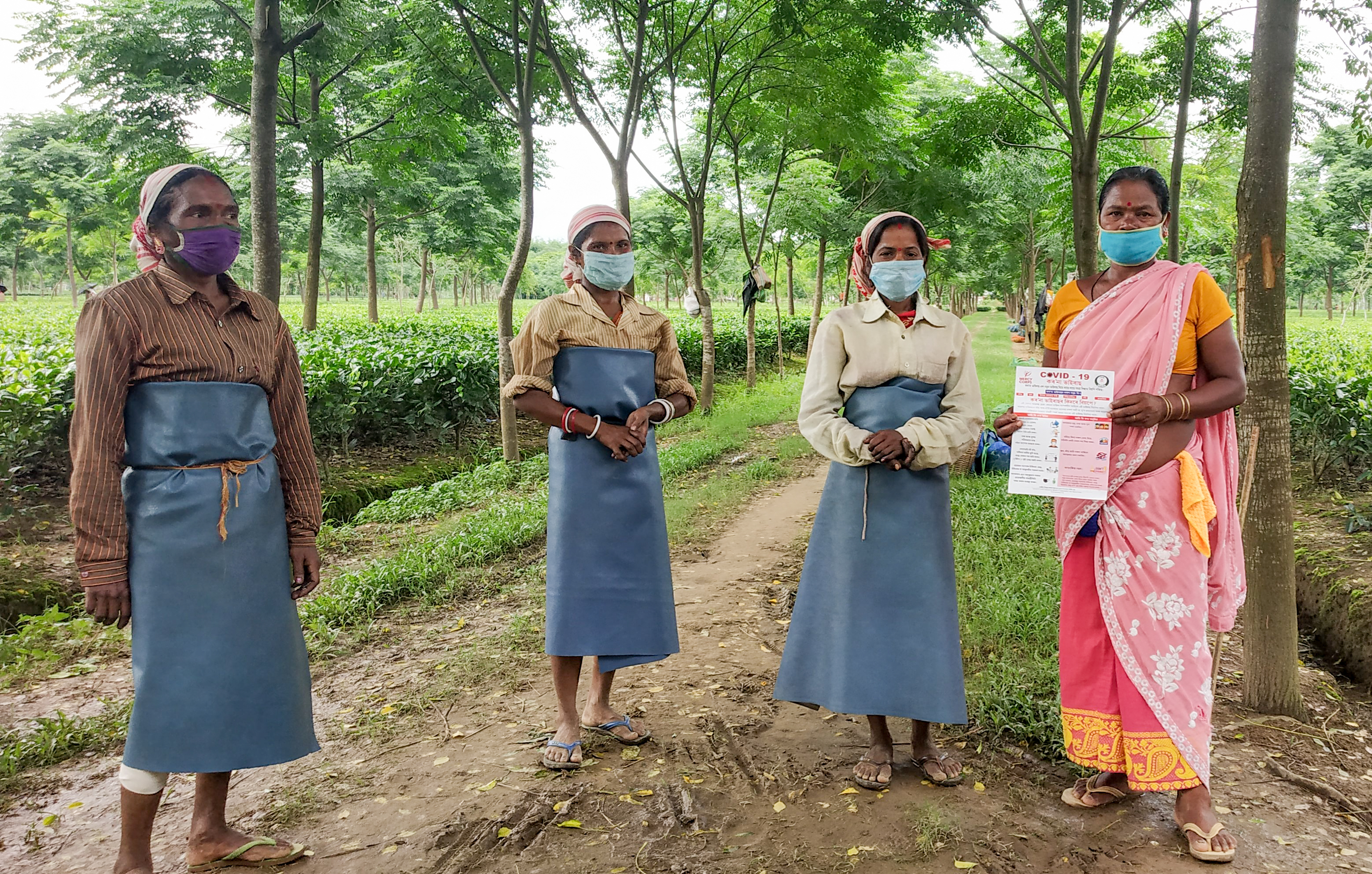
We expanded our work in light of the COVID‑19 pandemic and incorporated awareness campaigns to spread accurate and timely information about the virus and vaccine. We reached 120,000 people in remote tea and coffee growing communities in Assam and Karnataka with hygiene and sanitation items and vital information.
Expanding economic opportunities
In the hills of Kashmir in northern India and Darjeeling in the northeast, we trained hundreds of smallholder spice and potato farmers and beekeepers in sustainable agriculture practices. We also brought together farmers with similar business interests so they could have a stronger collective voice and advocate for their needs. Through our partnership with the National Bank for Agriculture and Rural Development, one of the premier public sector financial institutions of India, we helped these farmer groups access resources, skills, and financial services. As a result, farmer groups have been able to develop into formal registered organisations and bring more farmers into its fold.
Building on this experience, Mercy Corps is currently helping smallholder spice farmers in Rajasthan increase production, operate more profitably, and generate more income, with the overall goal of reducing poverty in the region.
Responding to natural and manmade disasters
Mercy Corps first started working in India after a massive earthquake struck the state of Gujarat in 2001. Since then, we have responded to a number of disasters such as floods and cyclones in states including Kashmir, Odisha, Assam, Tamil Nadu, Kerala, and Uttarakhand, providing communities with emergency supplies, cash transfers, and water and sanitation services. We work with the government, community groups, and other stakeholders to strengthen their ability to reduce risks, prepare, and respond to natural disasters. We also help communities build back their livelihoods and increase resilience so they are more prepared for future challenges.