Sign in

Registered users can set up individual fundraising pages.

close ×

Don't have a username? Register ›
Forgot your password/username? Get help ›

Guatemala

For the mostly poor, indigenous families of Guatemala's central highlands, access to land and opportunity is the first step out of poverty.

Latest News

  Posted June 7, 2010, 2:14 pm by Kevin Grubb

Reaching 500+ flooded-out families in Guatemala with aid

Country: Guatemala

Photo: Ricardo Herrera/Mercy Corps

Over the weekend, the government of Guatemala confirmed 172 deaths as a result of Tropical Storm Agatha, which struck the country last week, flooding and wiping out an estimated £11 million in agricultural lands, destroying bridges and transportation networks, as well as homes, leaving over 100,000 displaced.

Since last week, Mercy Corps has been responding to the immediate needs of families displaced by the disaster, distributing food rations and water supplies for a week to 528 displaced families — almost 3,000 people — in the regions of Zacapa and El Progreso, hard-hit by flooding from the Motagua River.

Today, we are continuing to reach additional families with food and water rations, as well as distributing much-needed hygiene kits to over 600 families most affected by Agatha.

  Posted June 4, 2010, 2:52 pm by Kevin Grubb

Tropical Storm Agatha: Our response in Guatemala unfolds

Country: Guatemala
Topics: Emergencies

This week's Tropical Storm Agatha has left 150,000 persons displaced throughout Guatemala as a result of flooding, damage and destruction of housing, roads and bridges, and mudslides and landslides.


Photo: Mercy Corps

The storm struck on day two of the so-called hurricane season, and, unfortunately, the rains — as the hurricane seasons is also the rainy season — continue to fall.

Overnight, flooding raged through another five villages and wiped out another bridge, washing away possibilities for these villagers to reach family, community centers, their crops and the market.

Our team has been working around the clock to assess the damage and get targeted assistance to those most in need. In the immediate aftermath of the storm, Mercy Corps is distributing food rations, water and hygiene kits for initial survival support to over 600 families in communities of Zacapa, El Progreso and Solola regions.

Many of these families have lost their homes in flooding and mudslides and are in temporary camps in schools and churches in the area. In the mid-term, we are shipping three or four water purification systems to pump water from river, filter and purify it, and provide a more long-term, sustainable source of drinking water than bottles and water tankers driving from clean water spots farther afield.

While this initial support is essential for survival, the long-term interventions will be more crucial in engendering and building long-term solutions for these affected families and communities to rehabilitate crop fields, provide seedlings for replanting crops and land rehabilitation efforts. Infrastructure reconstruction will need to happen quickly to reestablish links between communities across rivers and for farmers and families to access markets.

  Posted June 1, 2010, 2:08 pm by Kevin Grubb

After the storm: Assessing post-Agatha needs in Guatemala

Country: Guatemala

Croplands inundated and ruined by Tropical Storm Agatha. Photo: Mercy Corps Guatemala

Mercy Corps’ team in Guatemala is assessing the damage inflicted by Tropical Storm Agatha over the weekend.

The storm, arriving in the wake of the eruption of the Pacaya Volcano on Friday, left more than 150 dead with another 54 still missing, officially. It has also displaced more than 150,000 people through landslides and mudslides, flooding, destruction of property and washing out of roads and bridges, disallowing many residents from reaching their homes and their families.

The numbers, however, do not tell the whole story. Mercy Corps’ team is working closely with local government and villagers to assess the damage caused by the storm and determine where assistance is most needed and most effective for a long-term recovery. In regions where Mercy Corps works, entire fields of corn, squash and other vegetables are inundated. Many of the cornfields were only days or weeks from harvest. The loss of infrastructure such as roads and bridges severs peoples’ communication with — and ability to reach — their loved ones, as well as vastly hinders commerce in regions where small-holder farmers rely on this fragile transportation network to get produce to market for sale and income for their families.

While the immediate loss of life and property is tragic, the longer-term impact of the storm on peoples’ livelihoods, income and health is a slower tragedy already beginning to unfold that will need immediate and acute, as well as long-term and deliberate, support to those needing to rebuild their lives, and their livelihoods.

We will keep you updated on our efforts in Guatemala.

  Posted May 24, 2010, 3:36 pm by Kevin Grubb

Travels in Alta Verapaz

Country: Guatemala

The landslide removed the face of this mountain and took 40 lives with it a year ago. Now, the bulldozer clears the makeshift road — built along this muddy grave — every morning and every evening during the rainy season. Photo: Kevin Grubb/Mercy Corps

It's raining again in Coban, Guatemala. Driving out to visit some communities, we come upon the apparently eternal landslide bleeding from the rain the night before, and washing out the road with its rust-red mud and boulders.

Still tumbling down the bare mountain face, the rocks crash above, leaving puffs of dust, and we keep our eyes wide open for their trajectory. The initial landslide removed the face of this mountain and took 40 lives with it a year ago. Now, the bulldozer clears the makeshift road — built along this muddy grave — every morning and every evening during the rainy season. Several trucks carrying stones wait patiently but precariously on the road just before the wash-out.

After about an hour and a half, the road is more or less passable, but the trucks cannot maneuver their long and heavy cargo down the narrow slope, and the smaller vehicles weave between the trucks and the precipice which continues to erode before our eyes. As the buses and light trucks warily make their way onto the road, many stop to give the bulldozer operator a gift: a frozen chicken, mangoes, some cash. We take a break after successfully navigating the muddy obstacle course, stopping for a desayuno tipico, a typical local breakfast, at a roadside café — fried eggs, black beans and fresh tortillas, of course.


Walking through the overgrowth, making our way to visit farmers. Photo: Kevin Grubb/Mercy Corps

The leader of our small band is about nine years old. He carries a machete about half his height, slashing here and there at the overgrowth for effect. Mostly, the path is clear, though. Four of us are making our way to visit some farmers participating in Mercy Corps agricultural development programmes in the Alta Verapaz region.

Natural and mostly man-made disasters have pounded the inhabitants of this area since it was settled almost 20,000 years ago by the richest civilization in the world. The poverty is crushing, as the farmers make pennies to the dollar on high-value crops such as coffee and cardamom.

We meet two farmers who are collecting yucca, or cassava stems, to sell on informal markets as seed. They show us how the stems are cut and placed in the ground from which both roots and a new plant grow quite easily, the stems for future plants and the roots for consumption and sales. Mercy Corps has helped to develop the cassava root cultivation in this region, facilitating the purchase of the original stems for planting here from the south of the country.


A farmer chops off a bunch of plantains that are larger than the average banana, presenting them to us as a gift, but we make a purchase of them. Photo: Kevin Grubb/Mercy Corps

Traditionally, many farmers have grown cardamom here — which brings a decent price per pound, although a lot of labour goes into gathering that pound. More importantly, though, cardamom is not much in the way of nutritional sustenance. We pass fields of the cassava root in various stages of growth, and the farmers are proud to show off their crops. Even my rudimentary Spanish is of no use here, as the farmers all speak Qui’che, and all I got is “antioche” to every farmer we thank for their time.

The heat is oppressive — but I seem to be the only one suffering, praying for that rain of the previous morning, which could not have soaked my shirt through any more than it already was from my own sweat. We meander through pineapple groves with behemoth fruits, and the farmers are quick to boast of the superiority of their pineapples to their neighbors’, after they have implemented new plant care techniques learned with Mercy Corps.

Over the river and through the jungle, we meet up with a plantain farmer whose father had been a guerilla leader and had received over three manzanas (two hectares) of land from the government following the conclusion of the peace accords here in 1996. The plantains were also purchased with Mercy Corps support, and grow to full maturity in only nine months. He chops off a bunch of plantains that are larger than the average banana, presenting them to us as a gift, but we make a purchase of them.


A wooden shack spits smoke from its open doors, and we enter the small dirt-floor café where three women are preparing cassava root fries and ground cassava sweet cakes in grease over an open fire. Photo: Kevin Grubb/Mercy Corps

A wooden shack spits smoke from its open doors, and we enter the small dirt-floor café where three women are preparing cassava root fries and ground cassava sweet cakes in grease over an open fire. The smoke is a grim reminder of the billions of others around the world cooking hour by hour over open fires without any system of ventilation. The smoke, like the heat, bothers no one but the gringo.

The women are all shy laughter and proud to present me with a plate of food and a cup of warm coffee. The cassava fries are a hot and crispy, sweet and salty mix, rivaling any sweet potato fries in Portland’s hip joints. There is a Gallo beer ad on a poster across the way and I’m tempted to order the splendid local ale to go with the steaming fries. Kids peek around the doorframes, giggling and darting away when I catch their glance. A few of the farmers join us for some cassava cakes and we share expressions of equal joy at the flavour. The women slide the branches deeper into the fire’s embers.

The rain returns later.

Posted April 3, 2008 by Dan Sadowsky

Earning Money and Respect

Country: Guatemala

Tucurú, Guatemala — Even after three days of small-business training and a 78-dollar loan, Maria Reyes had her doubts. Apart from her household chores, the 48-year-old mother of ten had never been given so much responsibility. How was she ever going to operate a tienda from her hillside home in this remote countryside?

"I worried a lot in those days," Maria admits. "I was scared because I had a loan I needed to pay back."

But each month, she paid back 38 Quetzales (about US$5) of the loan that was guaranteed by other members by others in her women's solidarity group. And soon she began earning even more.

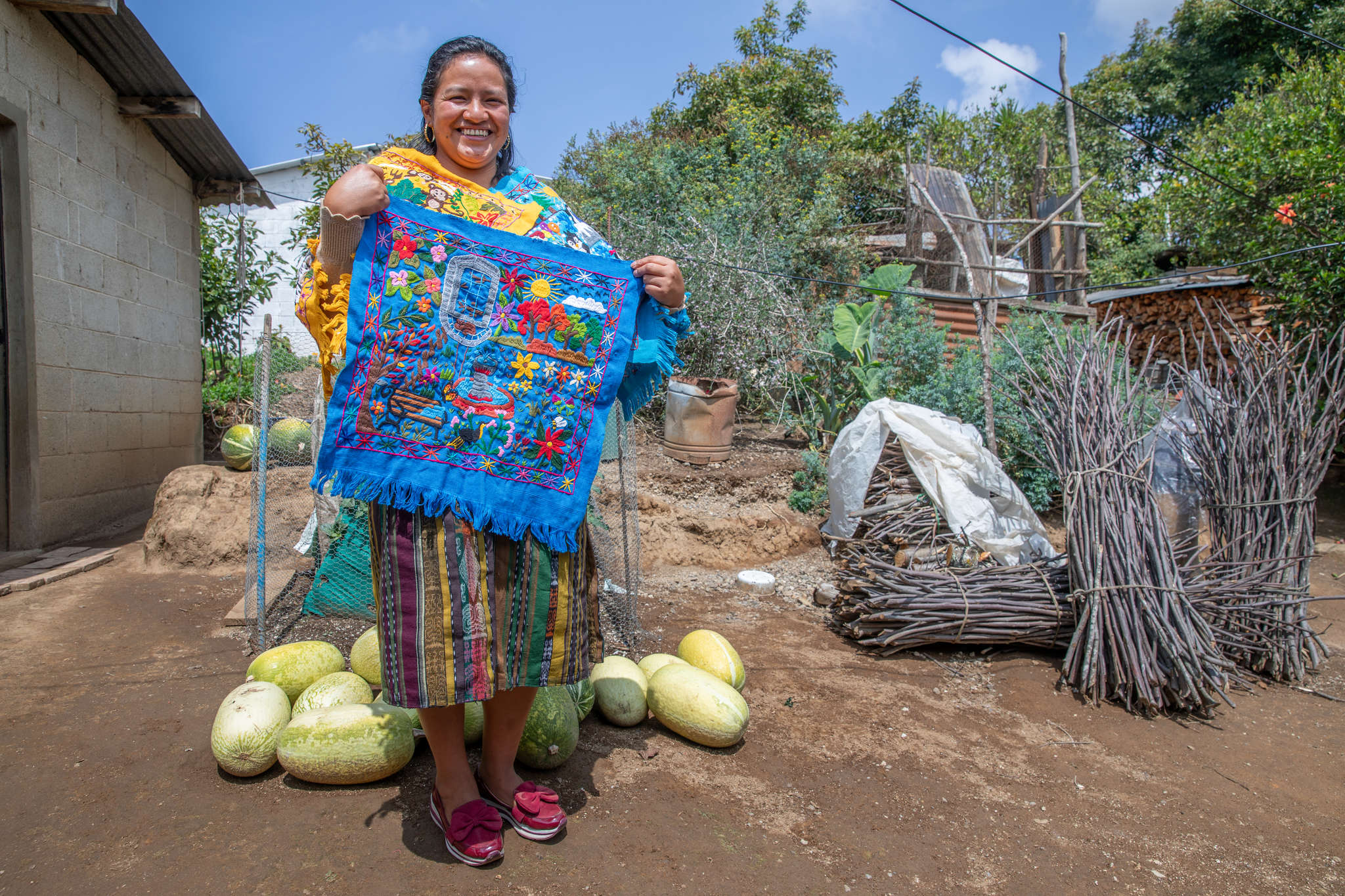
Maria is one of 400 women in Guatemala's central highlands who are learning how to manage small shops, weave colourful clothing and take care of chickens, pigs and cows — all of which are contributing to their families' bottom line.

For these women, it's a chance to break the cycle of exclusion and poverty — to break traditional gender barriers and take their family's financial future into their own hands. Most indigenous women in Alta Verapaz are illiterate and don't speak Spanish. School was never a priority; they were brought up to perform domestic chores, marry young and raise their own children.

Expanding a Health Strategy

Back in 2001, Mercy Corps and the Jack and Marie Eiting Foundation, in partnership with the Guatemalan health ministry, developed a programme to improve maternal and infant health in 30 Tucurú communities. By 2004, they decided to expand their work to uproot rural poverty, according to Dr. Rafael Carranza, manager of Mercy Corps' Community Health and Microcredit Project.

Poverty in the Tucurú region of Guatemala remains stubbornly entrenched. Most families still rely on simple subsistence agriculture, growing corn, beans and chili peppers to feed their family. Farm workers don't fare much better. Although Guatemala's economy grew in the early part of the decade, minimum salaries have stayed the same while prices rose. Rural families in particular have fallen further behind.

A 2005 expansion of Mercy Corps' programme extended coverage to all Tucurú communities, promoted reproductive health and family planning, initiated HIV/AIDS awareness and prevention activities — and launched a women's microcredit programme.

The idea was to empower women to help lift family incomes by launching small-scale enterprises that were culturally acceptable and environmentally friendly. Sixteen loan solidarity groups were formed, each with between 15 and 40 women. The groups participated in trainings about market research, loans, costs of doing business, and how to register their enterprise.

Recently, internal assessors conducted five focus-group discussions and 17 individual interviews and found:

  • Recipients reported improved levels of self-confidence as the result of their management capacity.
  • All the interviewees stated they have gained a greater decision-making role within their families.
  • Ninety-four percent say the additional income has enabled them to improve the education and nutrition of their children.

What's more, the women have proved to be worthy creditors: less than 3 percent of loans are in default.

Growing a Business

Not being able to pay off the loan was Maria's chief worry in August 2005, when she chose to open a small food stand to serve the scattered families of her village. Her husband and her sons work on the large plantations nearby, and on their own land they grow a little bit of coffee and cardamom, and beans and corn. "We made very little money," she says.

Her husband walled off a portion of their modest mud-walled home, making essentially a attached kiosk that enabled Maria to sell goods out of an open window. From there she sells food staples such as sugar, salt, ham, pasta, sodas, and ingredients for making tortillas.

A little more than two years after her first sale, what she makes from the tienda exceeds what her husband takes home from his work. "I used the profits to buy more stock and to buy things like sugar and coffee for the family."

It's a line of work that suits her well, she says. "I'm content. No one gives me orders. The only thing I'm thinking about now," she says, "is more capital."

Spoken like a true entrepreneur.

  Posted April 3, 2008 by Jacob Colie

Tilling the Soil

Country: Guatemala
  Posted April 3, 2008 by Jacob Colie

Owning the Land

Country: Guatemala
Posted April 3, 2008 by Dan Sadowsky

Video: What Youth Can Do

Country: Guatemala

In the remote Guatemalan countryside, Mercy Corps is working with an impressive group of young people to educate their peers and their community about HIV/AIDS.

Jovenes 4 Peace is part of our efforts to increase health services in Tucurú — efforts that are financed largely by a Portland family foundation that also supports similar Mercy Corps programmes in Honduras.

The HIV rate in this part of Guatemala is tiny, but the risks of infection are sure to climb as a new road is built connecting Tucurú to the coast. But in addition to raising awareness about an important issue, these youth — remarkable in both the challenges they face and the promise they show — are discovering things about themselves and their potential to effect change.

  Posted April 3, 2008 by Jacob Colie

A Community Abuzz

Country: Guatemala
Posted April 3, 2008 by Dan Sadowsky

Won in Translation

Country: Guatemala

On any given morning, the spotless health centre in tiny Tucurú, Guatemala is abuzz with activity. Carmelina Botzoc is a big reason why.

In the late 1990s, Mercy Corps was asked to reinvigorate the centre by its founders, Jack and Marie Eiting. Not only had it fallen into disrepair, but it had failed to attract Tucurú's overwhelmingly indigenous population.

Mercy Corps immediately made several high-visibility improvements. The grounds were spruced up, and the hospital was scrubbed and equipped with up-to-date technology. Bathrooms were modernized; the pharmacy was stocked full.

But things didn't truly begin to turn around until the hospital, which had alienated many locals, made a change that essentially dusted off the welcome mat.

In 2001, Mercy Corps hired Carmelina and another woman to serve as "cultural brokers" — go-betweens for the mostly Spanish-speaking staff and the mostly Q'eqchi-speaking visitors. The job went beyond translating language. For example, Carmelina found herself lobbying patients to have faith in outside clinicians and exhorting doctors to trust the Q'eqchi people's long reliance on herbal tonics.

"For the local population, seeing people dressed like them and speaking their language gave them more confidence," says Carmelina, 36. "The changes have been great: people are making better decisions about their health, recognizing danger signs and coming here when they need to."

She's also been heavily involved with a Mercy Corps youth programme, Jovenes 4 Peace, which has organised a group of indigenous teens to educate their peers and their community about HIV/AIDS.

Carmelina says she's always had an interest in helping people in her community. Even before joining Mercy Corps, she'd worked for 13 years as a volunteer health promoter with the government while she raised her five children, the youngest of whom is now 9. "I enjoy the satisfaction I get from supporting people in the community, from helping them emotionally," she says.

Soon she'll be able to help even more. After starting at Mercy Corps with a sixth-grade education, she's two more years of weekend classes away from becoming a nurse. It's a grueling schedule: She rises at 4 a.m. every Saturday for three hours of buses to the university followed by 12 hours of classes.

But when she graduates, she'll be one of the region's few female Q'eqchi nurses — she knows of only one other. And surely it will be partly because of her that others will follow.

Donate to
Emergency Response

£

How You Can Help:

Emergency Response

  • Donate £8: enough to deliver an emergency supply kit including soap and mosquito nets to a displaced family in Pakistan
  • Donate £14: enough to provide a week's worth of food, water and hygiene supplies for a Guatemalan family displaced by flooding
  • Donate £28: enough to secure safe drinking water for a cyclone-affected village in Myanmar for a year

Flooding in Guatemala ›

Program Details

Mercy Corps' goal in Guatemala is to encourage civic, government and business cooperation at local and national levels to raise the accessibility and quality of public services, according to the 1996 Peace Accord commitments.

Read more ›

Special Report:

Land and Opportunity ›

Mercy Corps
40 Sciennes
Edinburgh, EH9 1NJ, UK
By Phone: +44 (0) 131 662 5160
Contact Us   Office Locations

Mercy Corps exists to alleviate suffering, poverty and oppression by helping people build secure, productive and just communities.

Over the last 5 years, Mercy Corps has used 88% of our resources for programmes that help people in need.

Mercy Corps Scotland is a Company Registered in Scotland No. 208829 | Registered Charity No. SC030289

Copyright © 2010 Mercy Corps.
Mercy Corps will never sell, rent or exchange your email address.
See our Privacy Policy for more information.